Как выключить/включить принудительно ручник на Tesla Model 3

На самом деле не всё так очевидно, возможно помогу кому-то
Итак, вы приехали на сервис, там просят поставить авто на нейтраль и выключить ручник. Вы ставите нейтраль, выходите из машины, она встаёт на паркинг. Первый раз я сидел в машине на подъемнике со включенной нейтралью, но так машину мастерам не оставишь.
Идем в гугл и ютубы, которые нам не дают прямого ответа на вопрос, предлагают снять колесо и снять клемник с супортов(обесточить) — такое себе.
Чтож, погнали разбираться.
Сперва методом тыка я набрел на пункт "Стояночный тормоз" в меню "Безопасность" снизу. Он действительно отключает стояночный тормоз, но до выхода из машины.
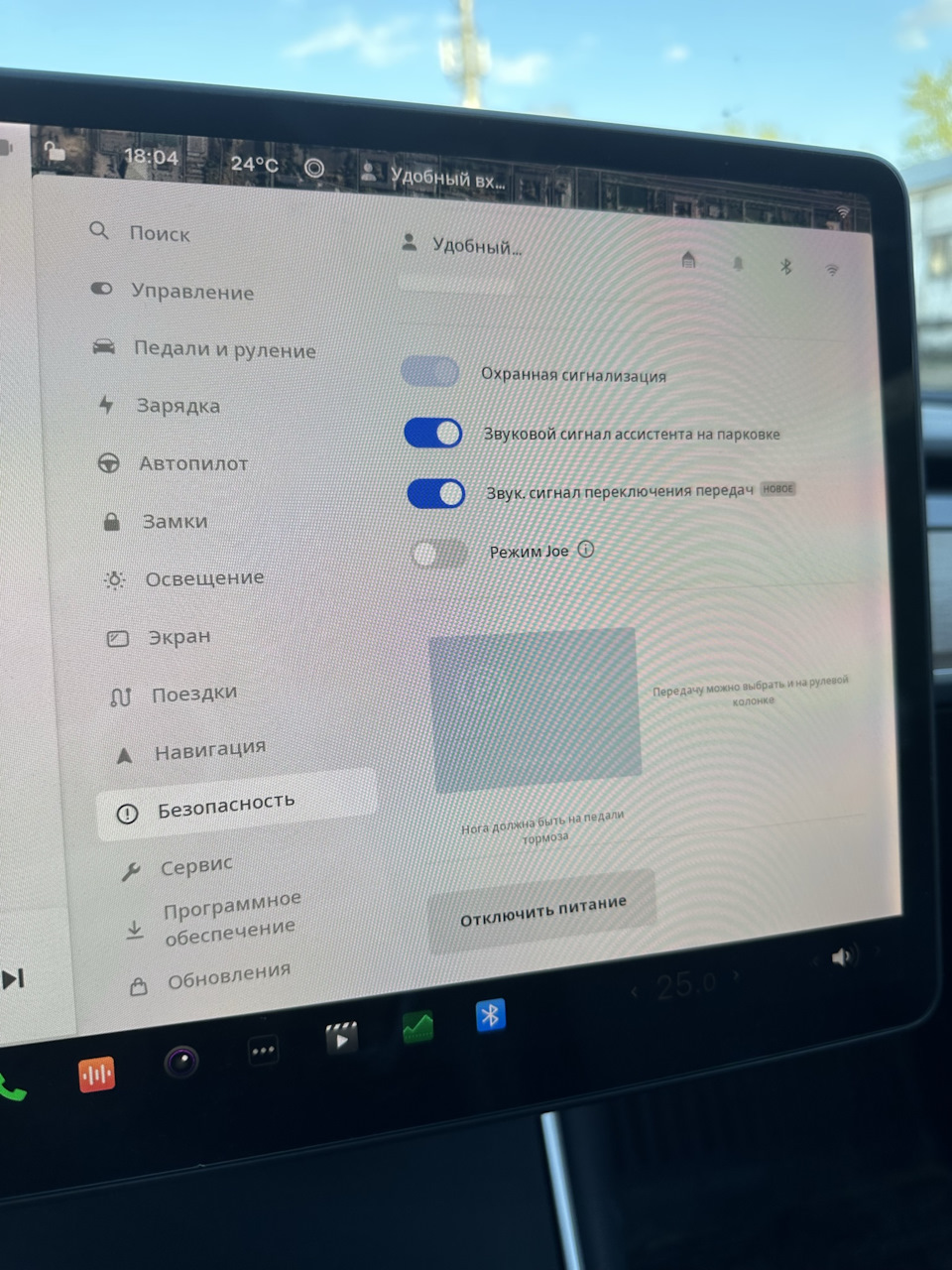 отключение стояночного тормоза
То есть, сидя в машине, я отжимаю большую синюю кнопку и начинаю катиться(как на нейтрали только на стопе — не знаю чем отличается).

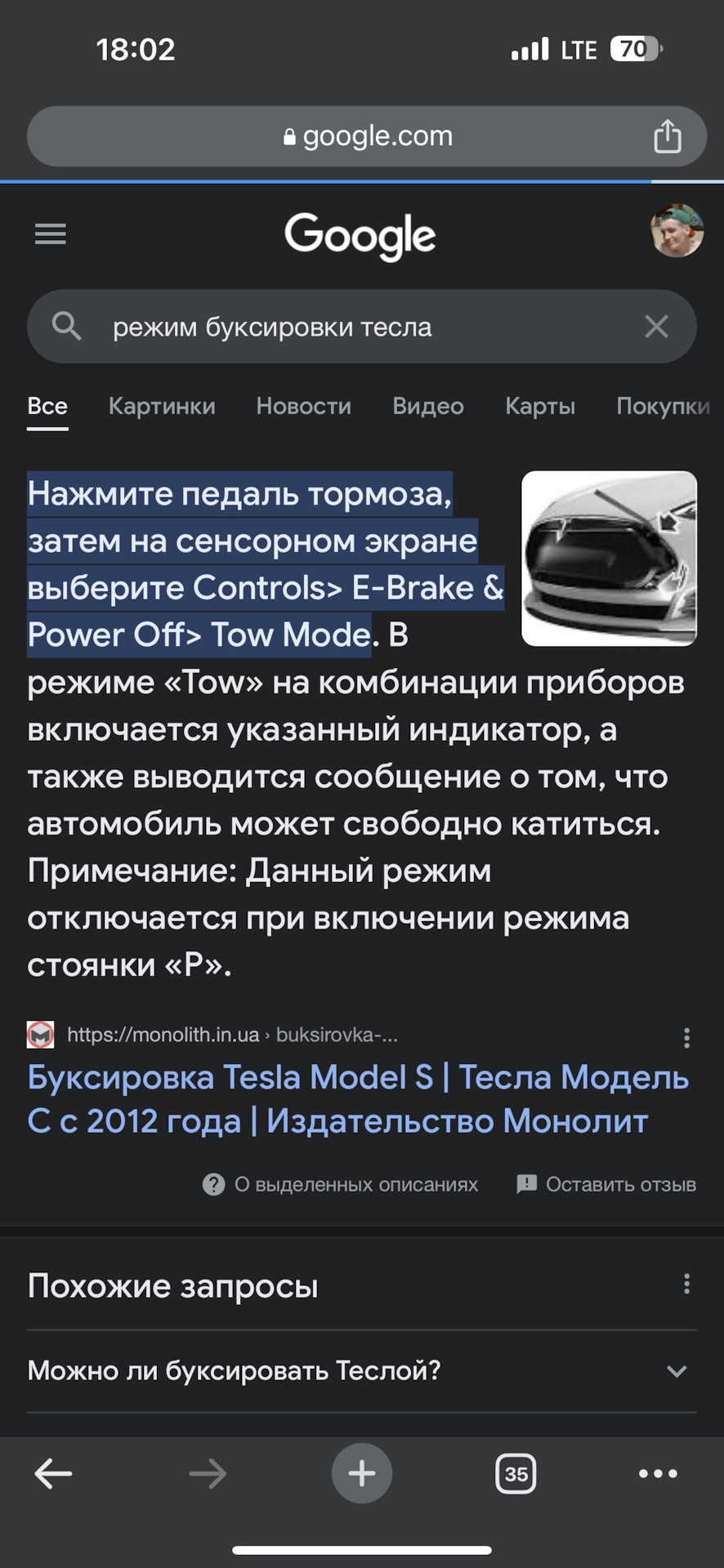
Нам предлагают включить режим буксировки(почему бы не сделать отдельный режим Подъемник или СТО?).
 режим буксировки
Находим его в меню Сервис, ставим на паркинг, жмем тормоз, включаем, выходим из машины. Ура, машина катится. Закатываем на подъемник, предварительно отключив Sentry mode(чтобы не орала сирена). Первые минут 10 всё ок, тачка не орет, висит под потолком, колеса крутятся. Отхожу от машины, слышу сигналку, возвращаюсь, режим буксировки выключен, сигнализация работает. Второй раз пробовать с оставленными рядом/внутри ключами не было нужды, попробую в следующий раз теперь. Странновато. Продолжаем наблюдение.
Где у Теслы аварийка?
Внутри Интерьер Model 3 простой и минималистичный. Из физических органов управления оставлена лишь кнопка «аварийки» (которую почему-то расположили на потолке), да два подрулевых переключателя, один из которых отвечает за дворники и поворотники, а второй выбирает режим движения.
Как закрывается Тесла?
На сенсорном экране дважды нажмите «OPEN», чтобы полностью открыть люк. Нажмите «CLOSE», чтобы полностью закрыть люк. При наличии препятствия люк не закрывается.
Как сделать перезагрузку Тесла?
Делается это так: надо нажать и держать педаль тормоза, нажать на руле обе кнопки над колёсиками и держать их секунд 15. Эта операция перегружает панель инструментов. После этого перегружаем главный экран: таким же образом нажимаем и держим оба колёсика на руле до тех пор, пока экран не оживёт.
Tesla has an Emergency Brake: Here’s how to use it


By Emergency Braking, I’m not talking about Tesla’s built in Collision Avoidance. This Emergency Brake can be used when parking on a hill or other steep incline — OR — if you are driving and your brake pedal is failing.
Parking on a Hill
Like all cars, when parking on a hill it is advised to turn your steering wheel so if your car was to accidentally roll, it would roll away from traffic and not into traffic. It is also advised to enable your Emergency Brake. When you put your car in Park, it stops the rear wheels from turning. That may not be good enough on snow and ice or an incline. When you push on the end of the PRND stock, you put your car in Park. If you push and hold, it will also engage the Emergency Brakes making it even harder for your car to roll. When the Emergency Brakes are applied the ((P)) icon will be displayed. When ready to drive, just do as normal and put car in “R” or “D”.
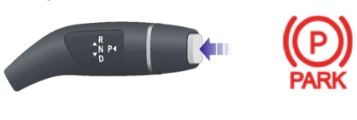
Driving and car not slowing or stopping
Push on the Park button while car is moving, and brakes will be applied. Like going down a hill too fast. An Emergency.
Hear are two YouTube videos that will help explain.
How to use the e-brake when parking:
How to use the e-brake while driving:
Don’t miss out!
Subscribe to our newsletter to be the first to know about Tesla’s upcoming features and new software updates.


Optimus Progress: Tesla Unveils Impressive Advancements [Video]
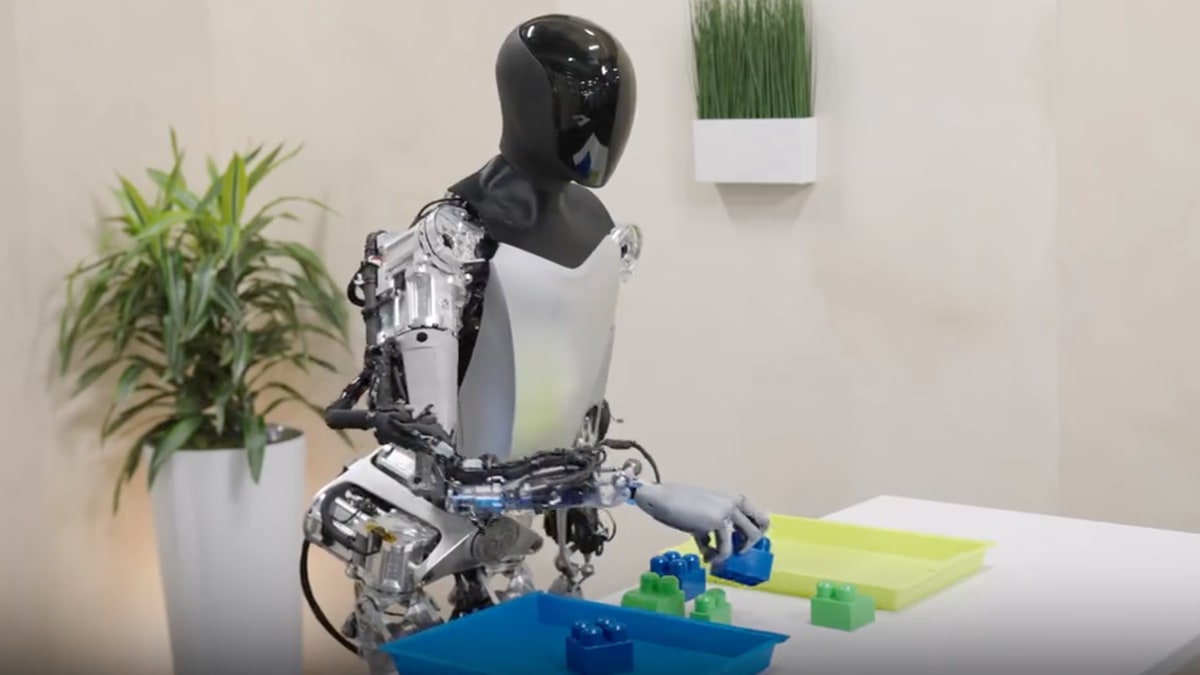
Tesla’s venture into the realm of humanoid robots, represented by Optimus, has taken colossal strides since its inception. Remember the first «robot» that was a person dressed up? Or the second one that was barely able to move? Initially met with skepticism due to a less-than-stellar unveiling, the latest updates showcase Optimus’ ability to autonomously sort objects and move around — specifically doing yoga and revealing Elon Musk’s vision inching closer to reality.
From Skepticism to Anticipation
Initially introduced at AI Day 2021, Optimus — or Tesla Bot — came off as a half-baked concept featuring a dancer in a robot suit, sparking doubts across the spectrum. The journey from a man in a suit and a CGI trailer to working prototypes in AI Day 2022 reflects Tesla’s unwavering dedication to innovation. The skeptics have served a stark reminder: Tesla’s capability for rapid advancement is unparalleled.
Recent demonstrations depict a more refined Optimus, exhibiting fluid movements, advanced balancing capabilities, autonomous task execution, and even dealing with an annoying human who keeps messing with the blocks! These advancements indicate Tesla’s relentless progress in neural network training, ensuring that Optimus can interact autonomously and adapt efficiently to real-world scenarios.
Autonomous Learning, Adaptation & Safety
Autonomous sorting and self-calibration are indicative of the significant leaps made by Optimus. The robot’s ability to learn, correct, and adapt showcases a future where monotonous, repetitive tasks are relegated to the past, allowing humanity to explore uncharted territories of creativity and innovation.
Safety remains paramount as Musk emphasizes the necessity for local safety maximization, highlighting the commitment to integrating Optimus seamlessly and safely into society. The promise of a centralized pause function showcases a thoughtful approach to ensuring human control and oversight.
Versatility and Vision
In a captivating display of versatility, Optimus was seen performing yoga poses, a testament to its adaptability and range of potential applications beyond industrial tasks. With Elon Musk envisioning Optimus performing ballet one day, the boundaries seem limitless for this technological marvel. In the video Tesla talks about Optimus’s capabilities, stating:
“Tesla Optimus is now capable of self-calibrating its arms and legs. Using only vision and joint position encoders, it can precisely locate its limbs in space. Accurately calibrated, Optimus learns various tasks more efficiently. Its neural net runs entirely on-board, using only vision. For example, it can sort these blocks by color fully autonomously. And it does so while dealing with the dynamic reality of our world. Optimus also demonstrates autonomous, corrective action capabilities. It can be trained to conduct new tasks, such as un-sorting. And after a long day of work, time to stretch. Namaste!”
Musk’s bullish predictions hint at Optimus contributing substantially to Tesla’s long-term value. With a potential demand reaching billions of units, Optimus is poised to revolutionize industries and redefine the integration of robotics in daily life. A 2027 release might have seemed ambitious, but given the rapid progress, it is increasingly plausible.
Tesla’s Optimus program illustrates ambition, innovation, and rapid development from CGI skepticism to witnessing a more refined, adaptable, and autonomous robot. I, for one, can’t wait for the next AI Day.