Армия в Южной Корее: как и сколько служат солдаты в этой стране?
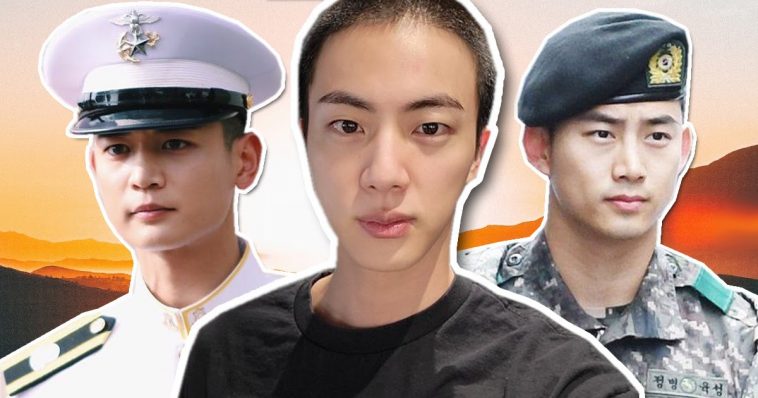
Обязательная военная служба в Южной Корее сбивает с толку; поклонники к-поп согласятся с этим. Хотя система призыва в Корее существует с 1957 года, ее отдельные детали постоянно меняются, что неизбежно сказывается на действующих айдолах мужского пола и их поклонниках всех четырех поколений к-поп.
Как именно происходит призыв в армию? Какие существуют службы, и как долго они длятся? Что происходит после призыва? А после демобилизации? Кто может отсрочить службу, а кто — пропустить? Как?
Вот все ответы по состоянию на декабрь 2022 года.
Почему существует обязательная военная служба?
Совместная зона безопасности между Северной и Южной Кореей. | Unikorea21 Shutterstock
Обязательная военная служба в Южной Корее официально началась в 1951 году во время Корейской войны. Вооруженные силы Южной Кореи, созданные в ответ на угрозы со стороны Северной Кореи, обладающей ядерным оружием, состоят из трех родов войск: армия, военно-морской флот и военно-воздушные силы. (Корейское пополнение армии США — также известное как KATUSA — входит в состав армии, а Корпус морской пехоты Республики Корея — известный как ROKMC — входит в состав ВМС).
Из этих трех видов вооруженных сил армия Республики Корея, или ROKA, является единственным видом вооруженных сил, имеющим право призыва.
Кто должен выполнять эту работу?
Призывом на военную службу в Южной Корее управляет Администрация военной рабочей силы (MMA), которая была создана еще в 1948 году.
Третья статья «Закона о военной службе» объясняет, что все мужчины «Республики Корея» должны участвовать в обязательной военной службе, которая была установлена Конституцией Республики Корея вместе с военным законом.
Хотя мужчины обязаны проходить службу, женщины также могут проходить активную или резервную службу. Однако это должно быть сделано на добровольной основе, и никакая другая форма обязательной службы невозможна.
Как происходит зачисление в армию?
ММА берет регистрационные данные всех 17-летних граждан мужского пола. Это делается для того, чтобы определить, кто из них будет готов к службе в следующем году. После сбора информации она сортируется и отправляется в местные военкоматы по всей стране.
Согласно закону, 1 января того года, когда южнокорейцу исполняется 18 лет, он будет зачислен на «первую гражданскую службу». Это означает, что, хотя он еще не обязан служить, он все равно несет ответственность за службу.
Затем, когда человеку исполняется 19 (или иногда 20) лет, он должен пройти «оценку нарушений и инвалидности», чтобы выяснить, годен ли он к службе. Для этой экспертизы существуют различные оценки, которые влияют на прохождение службы.
Корейские мужчины, получающие экспертизу нарушений и инвалидности. | SBS News
Служащие первого, второго и третьего классов могут быть призваны на действительную службу, а деятельность после службы зависит от их квалификации, образования и возраста.
Следующие два класса — это те, кто не может быть зачислен на действительную службу по состоянию здоровья. Четвертый класс — для тех, кто может поступить на дополнительную или вторую гражданскую службу, и те, кто относится к четвертому классу, зачисляются на вторую гражданскую службу.
Шестой класс — для тех, кто освобожден от военной службы по болезни или заболеванию, что характерно для инвалидов. Последний класс — седьмой — не подлежит аттестации, и это может быть вызвано болезнью или каким-либо психическим или физическим заболеванием.
После признания «дееспособным» для прохождения действительной службы по результатам экспертизы нарушений и инвалидности, мужчины получат призывные письма (призывные карточки).
Insight via SBS Drama
Большинство корейских мужчин призываются в армию в возрасте от 19 до 21 года (по корейским подсчетам — от 21 до 22 лет), хотя они могут начать добровольно призываться в армию с 18 лет.
Актер Пак Со Джун в форме военнослужащего | @bn_sj2013/Twitter
Один из тех, кто наиболее известен тем, что рано завершил службу, — актер Пак Со Джун. В отличие от многих звезд, Пак Со Джун закончил службу досрочно и поступил на службу в 2008 году, когда ему было 20 лет. Это означает, что он был освобожден в 2010 году и дебютировал в индустрии развлечений в 2011 году, снявшись в музыкальном клипе, а затем прославившись в дорамах.
Корейские мужчины могут отсрочить службу до 28 лет, международного возраста, но они должны поступить на службу до 31 декабря того года, когда им исполняется 28 лет.
Джин из BTS после того, как побрился перед призывом в армию| Weverse
Некоторые мужчины, занятые в индустрии развлечений, могут отложить призыв на военную службу до достижения 30-летнего возраста — в соответствии с поправкой о призыве, которая была принята в 2020 году с оглядкой на BTS.
Этим мужчинам потребуются рекомендации министра Министерства культуры, спорта и туризма, а также одобрение Управления по трудовым ресурсам вооруженных сил, которое часто выдается за международные достижения, внесшие вклад в развитие Халлю.
До объявления о призыве в армию в 2022 году самый старший участник BTS, Джин, уже отложил его до своего 28-летия в 2020 году. В том же году была принята поправка, которая позволила Джину снова отложить призыв до 31 декабря года, когда ему исполнится 30 лет (2022).
Хотя это означало бы, что ему пришлось бы призываться в армию в период между своим днем рождения 4 декабря и концом года, он решил отменить просьбу об отсрочке 4 ноября. Это также закрыло все разговоры, которые велись среди правительства и пользователей сети о том, что BTS могут найти альтернативные методы призыва в армию. Это была большая дискуссия, так как многие политики беспокоились о влиянии на страну, если BTS поступят на службу.
Как долго длится срочная служба?
Южнокорейские армия, флот, морская пехота и ВВС в фотосессии 2022 года. | @ROK_MND/Twitter
Активная служба в ROKA длится 18 месяцев. В KATUSA и в Корпусе морской пехоты служба также длится 18 месяцев. Служба в ВМС и ВВС длится 20 и 21 месяц соответственно. Другие вижы службы, такие как «общественная работа», длятся 21 месяц.
Однако есть и другие варианты, если вы отказываетесь от военной службы по религиозным соображениям. Одним из них является работа в тюремной системе страны.
Сотрудники исправительных учреждений | SBS
В течение этого времени их поочередно привлекают к работе в прачечной, на кухне, а также на административные должности. В отличие от военной службы, альтернативная служба длится 36 месяцев, что в два раза дольше, чем у обычных призывников. Кроме того, несмотря на несколько недель отдыха, их жизнь проходит в тюрьмах, и их передвижение регламентировано.
Даже когда обязательный призыв заканчивается, это еще не конец службы в армии. Солдаты, закончившие службу в вооруженных силах Республики Корея, автоматически переводятся в резервные силы. Здесь они должны отслужить четыре года в мобилизационном резерве, а затем еще четыре года в качестве резервиста Родины.
Получают ли военнослужащие зарплату?
Да, солдаты получают ежемесячное жалование! Рядовые второго класса получают ₩510,000 KRW (около 24 700 рублей), а рядовые первого класса — ₩552,000 KRW (около 26 750 руб). Капралы получают ₩610,000 KRW (около 29 600 руб), а сержанты — ₩676,000 KRW (около 32 75 руб).
Благодаря постоянному движению корейского правительства по улучшению обращения с военнослужащими, с 2017 года размер заработной платы увеличился на 88%.
Что происходит, если от призыва на военную службу намеренно уклоняются?
Несмотря на то, что по закону мужчины обязаны проходить службу в армии, нередко корейцы пытаются умышленно избежать призыва в армию различными способами. Однако из-за национальной гордости это обычно не одобряется и может иметь огромные последствия для тех, кто пытается уклониться от службы.
Один из самых известных случаев связан с известным певцом Ю Сын Джуном (которого также называют Стив Ю), который был одним из самых популярных сольных исполнителей в Корее в конце 90-х годов.
Ю Сын Джун | YTN
В 2002 году он стал первой знаменитостью, который уклонился от призыва в армию, отказавшись от корейского гражданства и получив американское. Это сняло с него обязательство по призыву в армию, но в то же время привело к его изгнанию из страны, поскольку ранее он обещал поступить в армию на нескольких платформах.
Корейское усиление армии США — Korean Augmentation To the United States Army

Корейское усиление армии Соединенных Штатов ( KATUSA Korean : 카투사 ) — это ветвь армии Республики Корея , состоящая из призывников из Кореи, пополненных в Восьмой армии Соединенных Штатов (EUSA). KATUSA не образует отдельное военное подразделение, вместо этого небольшое количество членов KATUSA направлено в большинство отделов Восьмой армии США, замещая должности рядовых солдат и младших унтер-офицеров армии США . KATUSA набираются из числа квалифицированных добровольцев, которые проходят обязательную военную службу для корейских граждан мужского пола.
В то время как армия Республики Корея несет ответственность за управление персоналом KATUSA, члены KATUSA оснащены стандартными армейскими задачами Соединенных Штатов, а также живут и работают с военнослужащими США. Этот вид усиления уникален для всей армии Соединенных Штатов во всем мире, потому что программа KATUSA была разработана во время корейской войны как временная мера, чтобы справиться с нехваткой личного состава в армии Соединенных Штатов.
СОДЕРЖАНИЕ
Программа KATUSA предоставляет вооруженным силам США корейскоязычных солдат, что обеспечивает большую военную функциональность и маневренность на всем Корейском полуострове. Солдаты KATUSA назначаются в каждое подразделение Восьмой армии США с их военной профессиональной специальностью, как солдаты армии Соединенных Штатов, и выполняют часть своей MOS. Кроме того, солдаты KATUSA служат переводчиками между местным населением и армией США и помогают США маневрировать в незнакомой местности. Неофициально они помогают американским солдатам, впервые прибывшим на полуостров, понимать корейские обычаи и немного говорить на языке. Это экономит деньги и рабочую силу США и символизирует дружбу и взаимную поддержку двух стран. Программа KATUSA остается важной для безопасности Республики Корея, не только для установления партнерских отношений с американскими вооруженными силами, но и для того, чтобы учиться друг у друга и помогать друг другу, особенно в связи с угрозой Северной Кореи, нависшей над Южной Кореей.
По словам Ричарда Вейса (2013 г.), автора книги «Прочное партнерство: Южная Корея и Соединенные Штаты», северокорейская угроза продолжает обеспечивать фундаментальную основу для отношений между Республикой Корея и США в области безопасности . Последний период напряженности вспыхнул. после запуска северной ракеты дальнего действия в декабре 2012 года и подземных ядерных испытаний в феврале 2013 года »(стр. 310). Предоставляя ценную информацию о полуострове, а также переводы, солдаты KATUSA эффективно выполняют свои MOS, что позволяет в будущем больше иностранного сотрудничества с Америкой. Нирав Патель и Линдси Форд (2009), авторы книги «Будущее альянса США и Южной Кореи: глобальные перспективы», продолжают заявлять, что «Альянс между США и Республикой Корея (РК) был ключевым компонентом системы двусторонних альянсов Америки в Азии на протяжении почти 60 лет.
Южная Корея была близким другом и ценным партнером в трудных обстоятельствах, даже когда личные отношения между лидерами США и Южной Кореи были в упадке «
История
Система KATUSA была создана в июле 1950 года во время Корейской войны. Это было начато как устное соглашение между президентом Сынманом Ли и генералом США Дугласом Макартуром. В то время армии США требовались вооруженные силы, обладающие надлежащими знаниями географии Кореи и способные отличать войска союзников (Южная Корея) от войск противника (Северная Корея) и лучше общаться между солдатами США и корейскими солдатами. Поэтому одни были призваны в КАТУСУ насильно, а другие добровольно (по собственному выбору) подали заявку. После обучения они были разделены на американские военные, такие как 2-я, 7-я, 24-я, 25-я дивизии. Во время Корейских войн в общей сложности 43 660 солдат KATUSA сражались за Южную Корею вместе с войсками США. Из них 11 365 человек пропали без вести или погибли.
Эта программа продолжалась после войны в Корее, и солдаты KATUSA в течение 18 месяцев с армией США изучили его профессию, а затем вернулись в армию Республики Корея для обучения других оккупациям. Согласно академии унтер-офицеров Вайтмана 8-й армии, «с созданием Учебного центра ROKA в 1963 году… солдаты KATUSA начали проводить весь свой военный тур в армии США»
Кодекс поведения KATUSA
- Я делаю все возможное, чтобы выполнять возложенные на меня обязанности с высоким солдатским духом, чтобы стать образцом для подражания для солдат РОКА.
- Я соблюдаю правила и подкрепляю комбинированную боевую мощь позитивным и активным рабочим настроем.
- Я горжусь собой как военным послом и решительно поддерживаю взаимоотношения между двумя армиями.
Процесс выбора
Чтобы стать KATUSA, подходящие корейские призывники, продемонстрировавшие минимальный уровень владения английским языком, набрав минимальные проходные баллы на стандартных тестах по английскому языку. Всего существует восемь различных экзаменов, и люди могут выбрать один из них. Восемь экзаменов: TOEFL, TOEIC, TEPS, G-TEP LEVEL 2, FLEX, OPIC, TOEIC SPEAKING и TEPS SPEAKING. Как правило, три самых популярных экзамена — это TOEFL, TOEIC, TEPS, а минимальные баллы для участия в лотерее составляют 83 для TOEFL, 780 для TOEIC и 690 для TEPS. Они могут подать заявку через Военную администрацию кадров (MMA), после чего их имя будет внесено в систему лотереи. Поскольку процесс отбора является полностью случайным, все подходящие кандидаты имеют равные шансы на победу. Кандидаты могут подать заявку только один раз.
Квалифицированные корейские призывники , демонстрирующие высокий уровень владения английским языком и способностей с помощью стандартного письменного экзамена (обычно TOEIC ), могут подать заявку на место в KATUSA. Призывники, набравшие квалификационные баллы, отбираются правительством Кореи на случайной основе посредством лотереи. После выбора KATUSA должны пройти шестинедельный курс базовой подготовки армии Республики Корея. Краткая ориентация и OJT проводятся армией США перед тем, как они приступят к своей постоянной службе в подразделении армии Соединенных Штатов, размещенном в Корее на время своей военной службы.
Число кандидатов, претендующих на доступную вакансию, чрезвычайно велико, поскольку многие солдаты считают, что армия США менее оскорбительна и более профессиональна в обучении и обращении с солдатами по сравнению с армией Республики Корея, и что к младшим военнослужащим лучше обращаются, имеют больше возможности получения образования (особенно в отношении изучения английского языка), более высокий уровень жизни и в целом более высокое качество жизни, чем их сверстники в РК. В 2012 году примерно 3400 солдат KATUSA служили в 25000 вооруженных силах США в Корее (USFK) по сравнению с 4800 в 2005 году и 11000 в 1968 году. По мере того, как количество американских солдат в Южной Корее уменьшается, количество солдат KATUSA также уменьшается. Соотношение солдат KATUSA и солдат США составляет примерно 1:10.
ВВС США
Хотя многие военно-воздушные силы Республики Корея в Корее работают вместе с военно-воздушными силами США , программы KATUSA с аналогом ВВС США нет; ROKAF сохраняет свои подразделения и командную структуру отдельно от своих коллег из ВВС США.
Критика
Поскольку программа KATUSA начиналась как временная мера во время войны и продолжалась аналогичным образом, до сих пор не было юридической легитимации программы в соответствии с корейским законодательством. Устное соглашение между генералом Макартуром и президентом Ри о призыве корейских гражданских лиц в вооруженные силы США так и не было задокументировано. Меморандум о назначении президентом Ри оперативного командования армией РК генералу Макартуру, известный как Пусан Букв, считается единственным оправданием программы KATUSA в Южной Корее. EUSA определяет состояние программы KATUSA в армии Кореи, Постановление 600-2.
Поскольку солдаты KATUSA не проходят специального обучения MOS перед развертыванием, а их боевые тренировки в значительной степени зависят от OJT от старших до младших KATUSA, новым KATUSA обычно требуется несколько месяцев инкубационного периода, прежде чем они смогут полноценно работать.

Одна критика программы KATUSA связана с различием в системах продвижения; Армия РК продвигает своих призывников на основе квот / времени, а не через систему заслуг. Солдат KATUSA может быть по званию выше американского коллеги с гораздо большим полевым опытом. Тем не менее, эта критика обычно опровергается контраргументом вооруженных сил США в Корее о том, что такое продвижение солдат KATUSA достаточно оправдано, учитывая тот факт, что солдаты KATUSA обычно обладают как минимум двухлетним опытом работы в колледже, что означает продвинутый военнослужащий. звание для солдат США.
Другая критика со стороны корейской армии основана на том факте, что большинство солдат KATUSA — из ведущих университетов Кореи. Для РОКА это означает, что они теряют умных солдат в пользу армии США. Чтобы свести это к минимуму, процесс отбора теперь случайным образом выбирает солдат из пула кандидатов, вместо того, чтобы нанимать наиболее квалифицированных солдат.
Процесс отбора требует, чтобы кандидаты представили свои результаты теста на знание английского языка в качестве обязательного документа, а также результаты тестов на водительские права и компьютерное программное обеспечение, такие как сертификаты Microsoft, качественным кандидатам, которые имеют право быть водителями или администраторами. Эти меры были введены для того, чтобы диверсифицировать круг кандидатов среди солдат корейской армии, но многие умные солдаты по-прежнему записываются в КАТУСА для получения превосходных условий и лечения. Целостный и случайный подход используется для отбора кандидатов в разные подразделения, и такое разнообразие результатов экзаменов, по-видимому, существенно влияет на то, на каких должностях находится каждый кандидат.
Некоторые из недавних критических замечаний со стороны Южной Кореи включают предполагаемый принудительный набор военнослужащих во время Корейской войны 1950-53 годов, когда 7-я пехотная дивизия реквизировала подкрепления для высадки в Инчхоне . Эти так называемые « первые солдаты КАТУСА » включали 313 мужчин из Пусана . (Южнокорейская сторона утверждает, что они были вывезены из лагерей беженцев, но были ли они вызваны добровольцами или были принуждены, остается предметом споров.)
KATUSA/Life
Prospective KATUSA Soldiers, who received basic military training at the Nonsan Army Training Center in Chungcheongnam-do for 5 weeks , travel by bus to USAG Humphreys after the graduation ceremony. You can't change the platoon because the platoon is usually decided in alphabetical order, but if you preoccupy a seat well, you can be in the same squad as the person you want. After that, he will receive three weeks of military training at USAG Humphreys . Afterwards, as can be seen in the 4th item of the KATUSA document, except for the first week, training such as WTT and ELT, excluding ALCPT, will be received by platoon. However, basically, in order not to overlap the working hours with the US soldiers , they wake up at 4:00 a.m. , and their daily start time is between 4:50 and 5:00 a.m. [1] Even in the state where it happened, except for weekends or days off, aerobic or strength training is done for 30 minutes to 1 hour. [2] Go to bed at 9 o'clock [3] On holidays, it delays the wake-up time by about an hour, so if you don't wake up , you don't have enough time to sleep.
Like the most up-to-date U.S. military base, the barracks are also up-to-date. Except for extremely special circumstances, usually 2 people use a room, and the bathroom uses a 4-person room. Each platoon is divided into floors, and even within them, squads are separated in their own way.
True to its name, KATUSA Training Academy , it feels more like a kind of school than a daily routine. I sit in the classroom and listen to the lecture rather than doing my daily routine or work during the day. It may feel easier than I thought, but the amount of academic work is not easy to teach in 3 weeks what a regular US military should have to do in at least 6 weeks. However, since KATUSA trainees have already completed basic military training at the Nonsan training center, they are equipped with basic military skills. Learning here is not a lack of time because learning how to adapt to American culture and the US military system is the key . After work hours, it allows individual self-study, but if you are a trainee with poor physical strength, you will receive physical training during that time. However, on weekends, religious activities are guaranteed, and personal maintenance time is freed up except for eating, sleeping, and waking up.
2.2. service after deployment
It can be said that there is no big difference except for the difference between KTA, wake-up time, bedtime, and seniority . However, lifestyles can vary by region, and even within that, how people live varies depending on the nature of the battalion or company. Even KATUSA Soldiers with the same position have a lot of differences. Usually, when you first transfer to a unit, you are not allowed to go out or stay out right away because it is an adjustment period. They use the weekend to familiarize themselves with the facilities within the unit, and are allowed to go out accompanied by senior KATUSA Soldiers only when necessary. After about 1-2 weeks, depending on the unit, sleepovers occur.
In particular, in the case of Camp Humphreys in Pyeongtaek, since the highest command (Eighth US Army, USFK, etc.) and the lowest company-level units are gathered in one base, even KATUSA soldiers living in the barracks next door may have completely different military lives. As an example, the barracks of the 2nd Combat Aviation Brigade and Communications Brigade, known as Combat Helicopter Units, are located within a 5-minute walk, but they are all different, from the restaurant where they eat each other to the morning PT, the timing and method of training, and the deployment of officers and noncommissioned officers of the ROK Armed Forces. there is When alumni from the training center get together and talk about KATUSA military life, there are many cases where they do not understand each other at all.
In the case of the support commander (in the case of a noncommissioned officer, it becomes the support team leader), the relationship with the ROK Armed Forces, including the training, the gap is extremely wide. Battalion-level combat units with lower ranks have nothing to do with or encounter with the ROK Armed Forces other than the support commander in charge of the unit, so they tend to pay more attention to their superiors and respond to problems on their own. In units, ROK Armed Forces officers are assigned to each department, and it is often the case that ROK Armed Forces officers take the side of KATUSA Soldiers and take care of them. Even in the case of training, combat units, regardless of position, participate in field training and camp, which is the training that is thought of in the general army, but command unit or specific KATUSA Soldiers do not know the training period itself or practice interrogation, which is somewhat unusual. also conduct training.
Barracks are barracks in English. [4] In the case of Uijeongbu, most of the rooms are 3 people in 1 room, and the old barracks at Camp Humphreys in Pyeongtaek are 2 people in 1 room. And if the senior you used to share leaves, you can naturally use a single room. In the past, there were also 4-person rooms, but now they have almost disappeared. The newly built barracks in Humphreys have two 1+1 private rooms with a shared kitchen and bathroom, so you can have complete privacy after work as if you were on your own. Of course, there is no internet, so you have to borrow the Wi-Fi of the US Army living nearby or use your own data. There is a drinking fountain with drinkable water in each barracks, but usually units buy water together and drink it or buy water separately when returning after a night out. In addition to private rooms, there is a common laundry room and rest room in the building.
Meals are DFAC [5] It is solved at the attached restaurant called In some cases, there is only one deepac at the base, but if the unit is very large, like Humphreys, there are multiple deepacs. Of course, each Deepak has a different taste, and KATUSA Soldiers living in barracks near Deepak do not have the taste, go to another Deepak a little away to eat or use food trucks. The menu also differs greatly from Deepack to Deepak, which is a bit tasteless. Deepak eats at most four or five main dishes throughout the military service, while other places with good taste have a wider variety of foods.
2.3. Advantages
2.3.1. Barracks facilities and welfare that are incomparable to those of the general Korean military
Not to mention USAG Humphreys , where the headquarters is located , and even if you look only at Yongsan Garrison , where half of the convenience facilities were demolished as of 2020 , there are convenient facilities to enjoy enough such as buses and convenience stores and specialty restaurants in the unit. Camp Humphreys, where the headquarters is located, has not only a restaurant, but also a billiard room, hospital, and movie theater. To take the gym as an example, in the case of a subordinate unit of the Korean military unit, the gym is very poor and there are few dumbbells and treadmills, but in the case of the US military unit, the gym is at least the level of a private gym or higher. [6] [7] Basically, because they are treated on the same level as the US military, the welfare is relatively good compared to the Korean military. Even if you can't do it, you get a dormitory for at least two people, and even though you work hard during the day, you don't usually call out during personal maintenance time unless you are in an emergency situation, before or after training, or during training . This may also be called separately depending on the nature of NCOIC and OIC.
Dormitory at Camp Humphreys. US 8th Army Official Youtube
Even when front-line units of the ROK Armed Forces are being robbed due to the controversy over providing poor meals to self-quarantine soldiers in the ROK Armed Forces, there has never been any corruption on the KATUSA Soldier side. [8] [9] In addition to DFAC, you can choose from the PX food court and restaurants in the unit to eat the food you want. Even if you eat at DFAC, there is absolutely no shortage of side menus, even if you give them one main menu. Alternatively, you can cook and eat with the cooking utensils in the barracks. In fact, in the case of the US military, there are many NCOs and officers who think that they must eat on time because they do not know when the war will break out, so even if it is not DFAC, other restaurants in the unit or outside restaurants somehow make them eat.
It doesn't matter much now, but the use of mobile phones was allowed long before the Korean Armed Forces were allowed to use mobile phones. [10] [11] Excluding the lotus lanterns, ROK soldiers must return their cell phones at 9:00/10:00, while KATUSA Soldiers can use their cell phones throughout the night if it does not interfere the next day. [12] If you are friendly with the US military, the US military can bring in alcohol, game consoles, and even laptops. [13] [14] You can borrow their items for entertainment. At this point, astute people would know, but even in the days when there were only feature phones, there were many cases where cell phones and laptops were secretly brought in and used consciously (at all, seniors in units of units are at the level of educating their successors on how to bring in unauthorized electronic devices. It can be seen that it is similar to the case in which soldiers secretly smuggled SD cards in the Republic of Korea Air Force before soldiers were allowed to use mobile phones in the past. .
Also, if you go out to work on a day off or holiday, compensation, that is, it allows you to go out with an extra day or two on the next night out. (This is different for each unit, so many units do not give it.)
The overwhelming number of out-of-field activities is also a plus. You can go out every day after work. [15] , Staying out 2 nights and 3 days a week is possible. Of course, depending on the unit, there are places where going out and staying out are partially restricted, and when there are unavoidable circumstances, going out and staying out may be restricted. Still, compared to the Korean military, it is true that there are overwhelmingly many activities outside the base. [16]
2.3.2. Advanced barracks culture
2.3.3. Opportunities to improve your language skills
2.4. disadvantage
2.4.1. high level of fitness required
On the website of the Military Manpower Administration, KATUSA soldiers place great importance on the physical strength of each soldier, and if they continue to fail in the physical strength test, they may be drafted into the general army . The basic physical fitness test standard is not very difficult because it is a standard for the ROK Armed Forces, but unlike the ROK Armed Forces, the US Army does not allow Gara at all and requires a straight posture . However, it is difficult to see it as a monster like the US military in the movie. Let's not be too scared, as the imaginary American soldiers have to go either to Camp Humphreys or to the Green Beret base of the special forces in Gwangju. In particular, in the case of administrative workers, it is possible to survive if only 40 to 50 push-ups are not tiring. In fact, KATUSA Soldiers often do not even reach the biometric level, except for combat units or a very small number of PT masters.
In the case of KTA, if only the instructor gets caught, the Magic Count [20] Even if my posture is slightly off, I often just say something on the spot and count normally. Of course, it would be nice if it was counted in this way at the base, but the problem is that it is not. In a unit with a particularly small number of people, there are cases where NCOIC and OIC closely monitor or count numbers together. Especially 2 Mile Run [21] If there are one or two people taking the test, you can go a little faster by finding a shortcut, but [22] [23] If you take a test in a platoon or company unit, you should follow the rules because there are many eyes to see. Even the 2mile run route is slightly longer than KTA. One good thing is that if you are not really a natural weakling, the Nonsan Army Training Center and KTA in South Chungcheong Province somehow train you to pass 60 points and allow you to come out. As an aside, if you are really familiar with NCOIC or OIC, you may get a better score than if you ask them somehow.
2.4.2. Difficulties in service due to the use of English
This is a phenomenon that happens surprisingly often. KATUSA soldiers are eligible to apply if they score above 780 in TOEIC, but the problem is that if they get a level 1 on the English CSAT, they just pass 780 in TOEIC, and unless they are not very good at it, they can easily score 800 by preparing for 1-2 months. However, TOEIC is tested only in LC and RC, the pronunciation is quite accurate, and the vocabulary level is also very easy. It would be a big mistake to think of Australian or British pronunciation. [24]
However, once you reach the rank of corporal, you can at least easily joke around with people who serve with you, and if you earn the rank of sergeant, you may soon find yourself naturally carrying on a conversation with American soldiers. If you don't understand what's being said, ask them to speak slowly and they will speak clearly. Still, it is true that your English skills are lower than those of language students (the qualification requirement is a TOEIC score of 900 or higher), so you may have a hard time in the beginning. [25]
2.4.3. Issues of racial discrimination by U.S. service members
This is a question that comes up almost without skipping out when Q&A about KATUSA comes out. Strictly speaking, if you behave with the same values as the US soldiers, speak English well, and have good physical strength, the chance of experiencing racial discrimination is less than 1%. If you're a huge loser or if you've made a big mistake, you may experience it, but in other words, if you don't make a big mistake, that's rarely the case. In other words, it means that it can happen unluckily if you can't adapt. Rather, they cover KATUSA Soldiers as their subordinates, or treat them the same as other US soldiers. There are even commanders who are more considerate of KATUSA Soldiers than US soldiers because they do not want to face friction with the Korean military, because their English is not good enough, or because they have a relatively higher level of education. Even if it does happen, it only happens below the rank of SSG (Staff Sergeant, in terms of the rank of the ROK Armed Forces), and if it is an officer or SFC (sergeant) or higher, it usually does not matter . Because racial discrimination has been a problem in the US military since before KATUSA was created. [26] It is quite well dealt with and systematized in these matters, and even if it does, EO [27] You don't have to worry about this because if you report it to , you and your company could be robbed.
alt=»CC BY-NC-SA 2.0 KR» width=»88″ height=»31″ />
This document is available under CC BY-NC-SA 2.0 KR. (except for some documents and illustrations where licenses are specified)
The copyright of the contributed document belongs to each contributor, and each contributor owns the copyright of the part they contribute.
Katusa’s Resource Opportunities Review

Katusa’s Resource Opportunities Review – What Is It?
Katusa’s Resource Opportunities is one the most widely-followed research services in the business. In it hedge fund manager and legendary resource stock financier Marin Katusa reveals why he’s betting millions of dollars of his own money on 6 specific gold stocks. Not one in 10,000 investors know this hidden fact in today’s gold market.
Below, he reveals how you can make a fortune along with him, starting today.
What we’re seeing today is absolute carnage.
Never have the markets had such a shock where economies, supply chains and health have all stretched to critical mass.
What were extreme market conditions one day became instant entries in record books.
Every new day seems to bring increased panic and downside.
On a comparative basis to this market meltdown, only the 1929 crash compares. The charts look eerily similar…

Dumb Money Confidence indicators from various outlets are reaching all-time lows. This means that novice investors have all but thrown in the towel.
This past month saw the most down 90% down volume days in the history of the U.S. exchanges.
Now, this is going to be painful. And difficult to digest.
- The worst is not yet over and we are at that critical moment. With mass panic and fear, blood is now in the streets.
You can feel it everywhere. It’s easy to talk about being a contrarian but now that it’s time to step up to the plate – many investors are paralyzed.
Wall street analysts, major banks and investment bankers are downgrading stocks faster than any time since 2008.
You are Witnessing “The Great Reset” Right In Front of Our Eyes
Businesses are closing. Institutions are shutting doors.
Entire industries will be altered.
Oil just crashed through $25 per barrel. Many oil companies are in serious trouble. Many oil service companies face a massive storm ahead.
Silver collapsed from $20 to $12. Mines are being shut down and many companies can’t make money at the current silver spot price.
Gold companies initially corrected hard. Hundreds of mines are shutting down. Stock prices of world class producers are acting like juniors.
For years, top investors have waited in the wings, cashed up, for opportunities that come around once in a decade. Or once in a generation.
But put money in the wrong place, or for the wrong time period – and you will lose.
The truth is that investing in these times is very difficult.
One person I want you to get to know is someone that’s seen a few crashes in his career – and navigated his portfolio through the storm.
How to Make a Fortune in a Market Crash – With Marin Katusa
- In the last crash of 2008, he came out of the last Great Financial Crisis and multiplied his net worth by several times.
- He founded Canada’s third largest copper mine at the age of 27.
- He started a precious metals and commodities focused hedge fund before the age of 30.
- He wrote a New York Times bestselling book, The Colder War, before the age of 35.
Marin is the real deal and puts a LOT of skin in the game. Often putting millions of dollars of his own money on the line in gold, silver and oil stocks.
And what he sees right now in the markets is unprecedented.
Marin wants you to be aware of what’s happening right now… and what could happen next.
He goes over everything you need to know in this market meltdown:
- Why “Financially Transmitted Diseases” (negative rates) will take the world by storm
- Why gold will be front and center in this panic
- Which sectors are going broke
- Which markets and companies are trading at values not seen in generations
- Which group of stocks to focus on for a potential slingshot move upwards in a recovery
- The asset class he’s most bullish on and why you should be too
In short: If you’re like most people, you might be sitting on the sidelines right now… or worried the ongoing crash could wipe out your earnings…
But when this crisis is all over, the natural resource market, in particular, will present immense opportunities for investors .
Who is behind Katusa’s Resource Opportunities Advisory?
Katusa Research is an independent investment research firm founded by professional investor Marin Katusa.
Starting from scratch, Marin has built a large personal fortune… all through his ability to find great investments. During his career, he has sat on the board of a public company, arranged over $1 billion in financings, and written the New York Times bestselling book, The Colder War.
Marin’s insight has been featured in The Wall Street Journal, The New York Times, Bloomberg and CNBC. He has traveled over one million air miles visiting over 500 resource projects in more than 100 countries.
Unlike some financial firms, Katusa Research does not accept money from companies in return for coverage. They turn down all offers of kickbacks, brokerage commissions, and referral fees. They have no hidden agenda and they are not for sale. They work for their subscribers, not advertisers. And the investment guidance they provide is the guidance they follow themselves.
Katusa Research is committed to helping individual investors learn how to navigate the complex investment world.
What Do You Get For Your Money?
Beginning immediately, you’ll receive:
The Monthly Issue
You’ll be sent an electronic issue of Katusa’s Resource Opportunities straight to your inbox.
Each issue evaluates Katusa’s current open positions in the resource markets, future plays, and deep research behind the companies that his subscribers are investing in.
By the way, Katusa Research is 100% independent.
Marin Katusa accepts no outside advertising from any financial, fund, or stock companies to be recommended in Katusa’s Resource Opportunities. He acts only in the best interest of Katusa Research subscribers.
And he claimed that he puts millions of dollars of his own money on the line.
I can also say with 100% certainty the level of depth in these issues is unmatched. This is why Katusa’s Resource Opportunities is considered the premier natural resource newsletter in the game.
With your subscription, you’ll also receive:
The 3 Best Gold Stocks to Own in 2020
This report is a very detailed report on Katusa’s top 3 gold holdings (and a bonus 4th under-the-radar company you’ve likely never heard of or read about anywhere. The founder just sold his previous gold company for under a billion dollars).
Special Reports
These reports will give you all the details on specific sectors, so you can jump in on quick money-making opportunities.
Interim Alerts
Katusa Research send out regular alerts to take advantage of quick plays and secure the kinds of gains that others would take months—even years— for others.
You could have made the money on your subscription back in just one of these plays.
With your membership, you’ll also get:
Access to Katusa’s Personal Resource Portfolio
And your chance to invest alongside Marin at the same terms and price. These are the exact companies he’s investing and speculating in with millions of dollars of his own money, his family money, and his fund.
Access to the Katusa Research Members Area
You will also receive 24/7 access to the Katusa’s Resource Opportunities website that members can access at anytime, anywhere.
Quality Customer Service
If you ever have questions about your membership, simply give one of Katusa Research’s friendly Customer Service team members a call during office hours, Pacific Time. They will be happy to walk you through anything relating to your subscription.
How much does it cost to become a member?
Katusa’s Resource Opportunities regular price is $3,495.
That’s how you can receive the benefits of membership in an exclusive club of professional investors in the natural resource market.
The price extends to your annual renewal as well.
What People Are Saying About Katusa’s Resource Opportunities
As far as I’m concerned Marin is the next Warren Buffett. In the resource area, there’s nobody that’s even a close second to Marin. He’s actually… I’d consider him something of a genius.
Doug Casey, Chairman of Casey Research
[Marin] has worked directly with and financed many companies of well-known individuals in the resource industry and has become one of the most trusted and well-connected dealmakers in the junior resource sector.
Rick Rule, President & CEO of Sprott U.S. Holdings
Marin Katusa is one of the few people who truly understands oil and mining from a technical, financial and operational perspective and still keeps a focus on the overlying objective, namely making money for the shareholders. He is a good friend and a person whose opinion really matters to me.